The Journey to WELL… and Back
How a certification process became a lesson in wellness, collaboration, and long‑term commitment
By Jaime Kacperowski, CPSM, WELL AP, and John F. Wright, AIA, LEED AP BD+C, WELL AP
Achieving our WELL accreditation wasn’t just a professional milestone—it was a genuine journey. A six‑month stretch of discipline, curiosity, shared purpose, and the occasional “Are we sure we can do this?” moments. Approaching the exam coming from different areas of professional expertise, but each with a strong background in sustainable design, wellness and inclusion, we looked to leverage each other’s strengths to achieve success. Looking back, what stands out most are the themes that subtly shaped the experience: common goals, collaboration, tinkering, research, and commitment. And, fittingly, these themes mirror the very framework and mission of WELL itself.
Common Goals: The Starting Line of Wellness
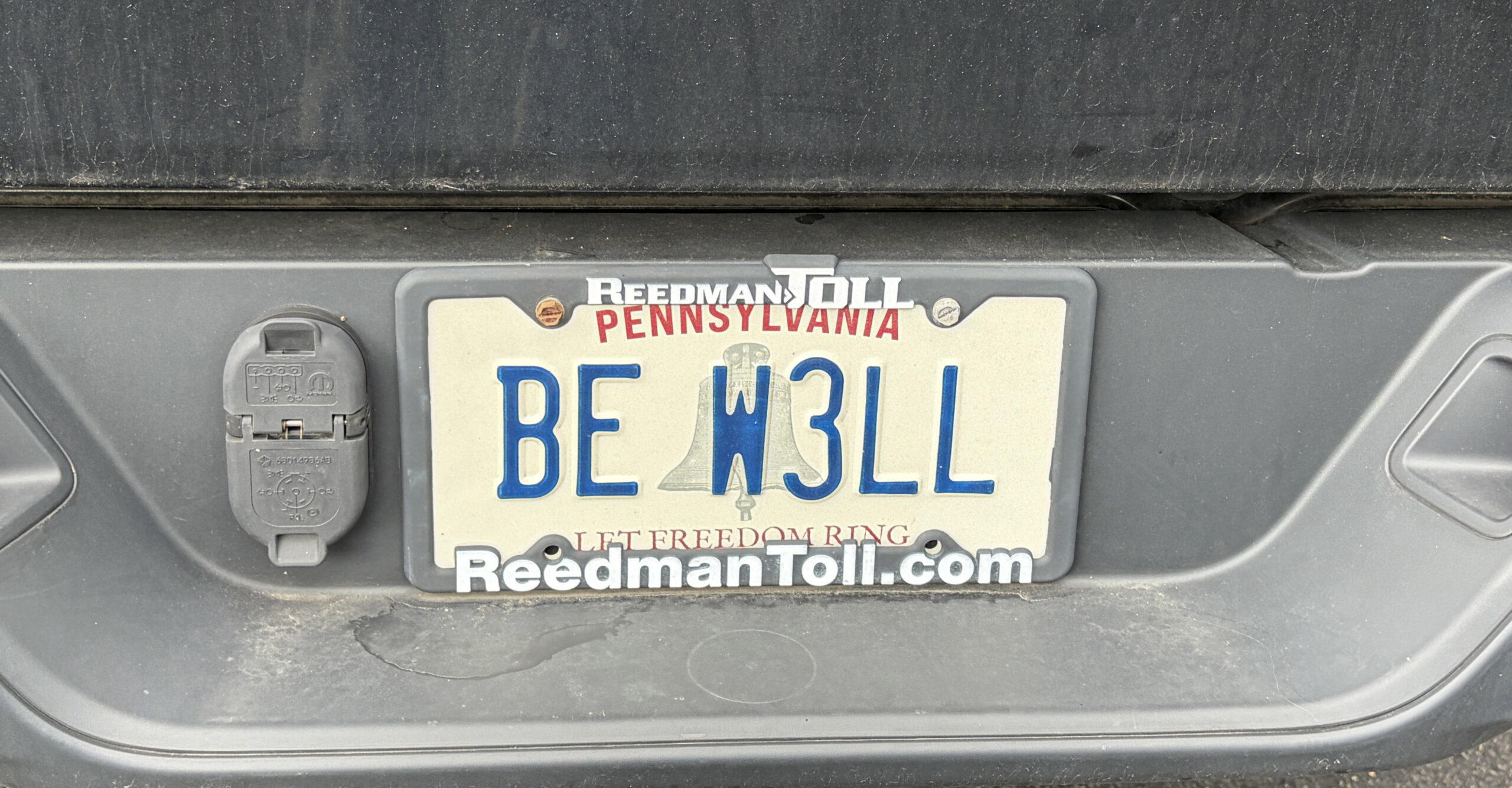
Our journey began with a shared belief in sustainability, wellness, and continual growth. John’s personal slogan – “Be well” (yes, it’s literally on his license plate) – captures the spirit that fueled this goal. Most of us are already on some kind of wellness journey in our personal lives: better habits, better nutrition, ongoing education, and striving for healthier routines. WELL simply gave us a structure to channel that collective energy.
Just like WELL demands accountability through documentation, we created our own system of accountability. We designed a study plan that played out over nearly six months, complete with weekly meetings, shared resources, quizzes, and thoughtful discussion. For Jaime, she had been in the midst of taking another professional certification exam as we were getting underway, so she was already in high-gear, and this was just another task for her to run with. For John, it had been years since he had taken a structured certification exam, so there was some initial rust to knock off.
However, from the outset our goal and plan were fully aligned. This wasn’t just about memorizing features or understanding the ten WELL concepts—it was about creating a mindset and truly absorbing the material. An outlook that aligned health, sustainability, people, and places.
Tinkering: The Feedback Loop That Kept Us Moving
If common goals got us started, tinkering kept us on track. We tried a variety of study materials including Kahoot!, online tests, flashcards, and discussion-based learning. We gave ourselves a manageable time frame to work through the materials, which still at times seemed to go too fast. Each week became its own mini wellness check, asking each other questions like:
- Did we hit our study goals?
- Where were we falling behind?
- What resources weren’t quite clicking?
- How could we adjust to improve our process and results?
This trial-and-error process mirrored the WELL philosophy more closely than we expected. Just as WELL encourages organizations to continuously evaluate, adjust, and improve building performance, we applied the same feedback loop to our learning process.
Our “study environment” was just as flexible as WELL-certified spaces aim to be—in office, at home, on video calls, on planes, watching kids sporting events, wherever we could make it work.
Most importantly, accountability to each other kept us centered. When one of us felt overwhelmed, or the demands of our day jobs mounted, the other reframed the perspective. We were learning more than the course material—we were learning how far we could go when we didn’t go alone.
Commitment: More Than a Test, It Was a Partnership
Commitment is at the heart of WELL certification, and it became the heart of our process too.
WELL isn’t just a commitment to a building—it’s a commitment to the people inside it. Similarly, our studying wasn’t just a commitment to a test. It was a commitment to each other, and to the idea that this knowledge would help us design healthier, more meaningful environments. Through supporting one another, we leveraged each other’s specific strengths and skills to better our understanding and appreciation for the world around us.
Yes, we wanted to pass the test. And yes, we were confident we could—even if it wasn’t on the first try (though we were very happy it was for each of us). But the deeper reward was what we learned along the way: the principles of healthier environments, the value of teamwork, the impact of thoughtful design, and the way wellness concepts shape human experience.
By the end, our journey had become holistic, methodical, and—as it turns out—pretty WELL‑aligned.
What the Journey Taught Us (Besides Acronyms and Features)
What we learned is simple but powerful: Together, we can do anything.
That realization is bigger than a certification. It influences how we approach our work, how we collaborate, and how we envision our future projects. If a six‑month study program could teach us this much, imagine how applying the WELL principles across our firm could transform the environments we create—and the people who experience them.
The potential is exciting. And this journey, though completed, might just be the beginning.
Author

